Model Comparisons
Jev vs djev vs Laya vs OpenJev vs SemIf: Which Decision Model Should You Use?
Compare Jev, djev, Laya, OpenJev, and SemIf across benchmark quality, calibration, speed, multimodal input, self-hosting, open weights, and production trade-offs.
Jev vs djev vs Laya vs OpenJev vs SemIf: Which Decision Model Should You Use?
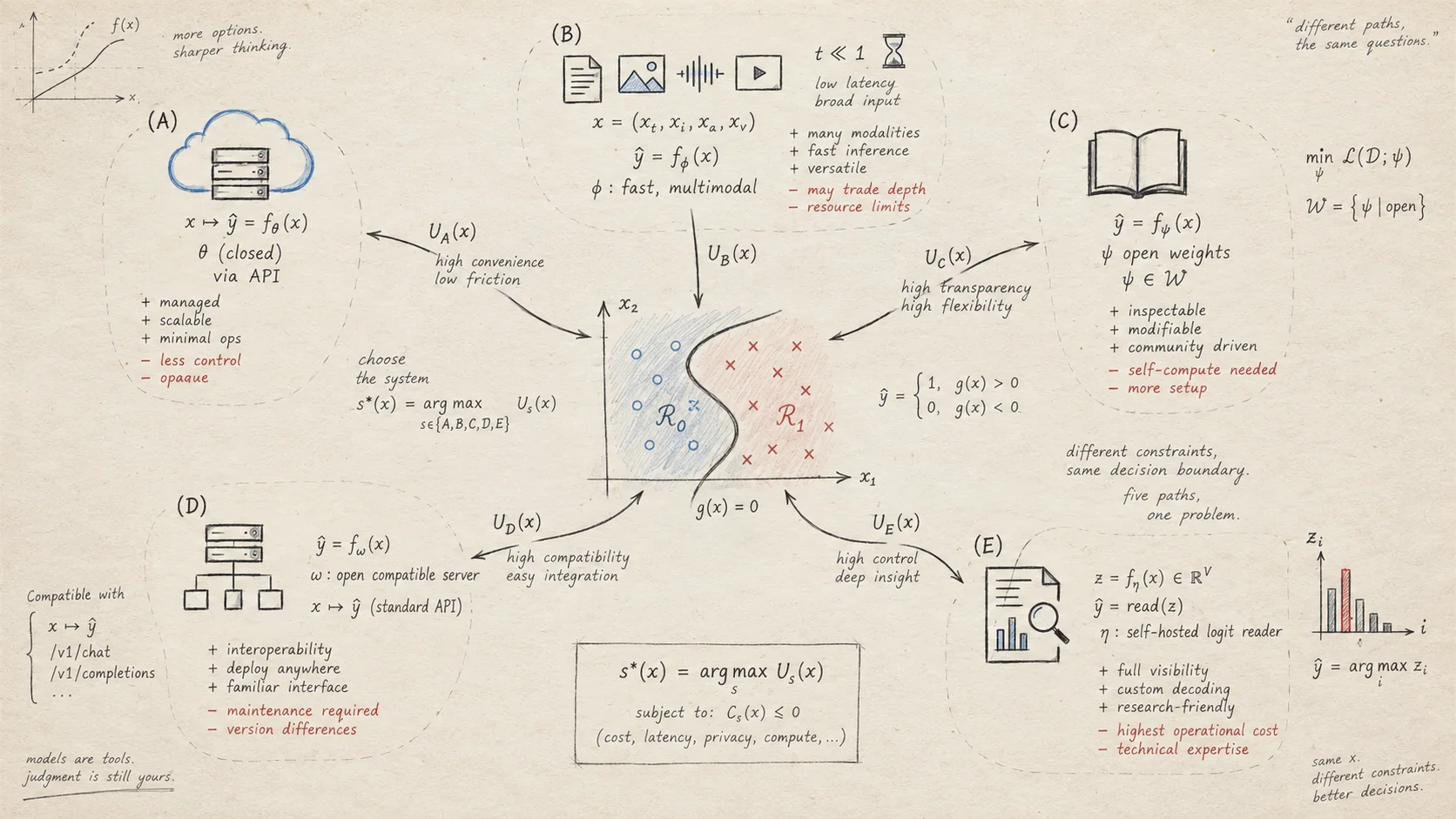
If you are comparing Jev vs djev vs Laya vs OpenJev vs SemIf, the most useful question is not “Which model has the highest score?” It is “Which operating model fits my product, data boundary, latency target, and tolerance for calibration work?”
These systems all target structured decisions rather than ordinary chat completion, but they make different trade-offs. Jev is a hosted System One model focused on calibrated, typed decisions. djev emphasizes speed and native image or camera input. Laya offers open weights, self-hosting, and fine-tuning. OpenJev provides a compatible self-hosted server with multimodal and thinking options. SemIf reads logits from open models and comes close to Jev on the aggregate benchmark while keeping infrastructure under your control.
This guide uses the official comparison pages and their published JevBench v1.3.0 snapshot, updated in September 2026. Treat the numbers as a decision aid, not a substitute for testing your own workload.
Table of contents
- The short answer
- How to read the benchmark
- The five systems at a glance
- Jev vs djev
- Jev vs Laya
- Jev vs OpenJev
- Jev vs SemIf
- Choose by constraint
- How to run your own evaluation
- Frequently asked questions
The short answer
Choose Jev when your application needs a hosted API, typed answers, and probabilities that are useful for routing or escalation without operating a GPU or fitting a calibration layer first.
Choose djev when speed and native image or live-camera input matter more than production calibration, especially while its hosted preview remains convenient.
Choose Laya when open weights, offline deployment, multilingual coverage, and fine-tuning matter more than zero-shot quality on difficult decisions.
Choose OpenJev when you want a self-hosted, Jev-compatible request shape with image input or a thinking mode, and you are willing to operate the runtime.
Choose SemIf when you want an open implementation that reads decision logits from models you control, can keep data inside your network, and have the GPU capacity and evaluation process to calibrate it.
How to read the benchmark
The referenced JevBench v1.3.0 comparison reports one shared evaluation method across 52 systems and 534 decisions: 72 easy, 96 standard, 146 judge-style, and 220 hard cases. Its composite score combines intelligence, calibration, speed, and cost.
The published composite snapshot is:
| System | Rank | Composite score | Main operating model |
|---|---|---|---|
| Jev 1.13.0 | #1 | 74.4 | Hosted production API |
| SemIf | #2 | 73.1 | Self-hosted open-model logit reader |
| djev | #3 | 73.0 | Hosted API with multimodal input |
| OpenJev | #11 | 66.4 | Self-hosted compatible decision server |
| Laya | #33 | 54.4 | Self-hosted open weights |
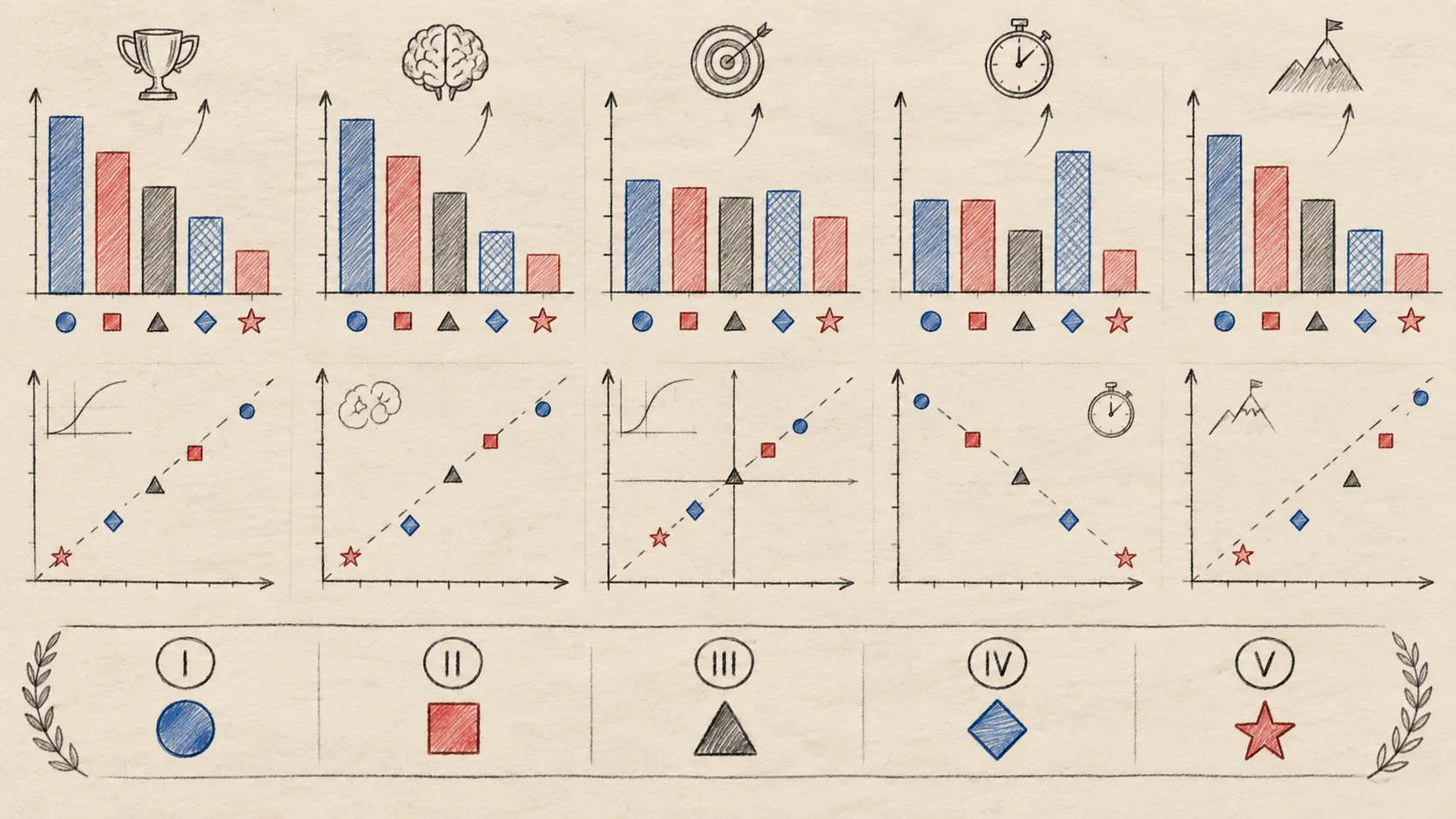
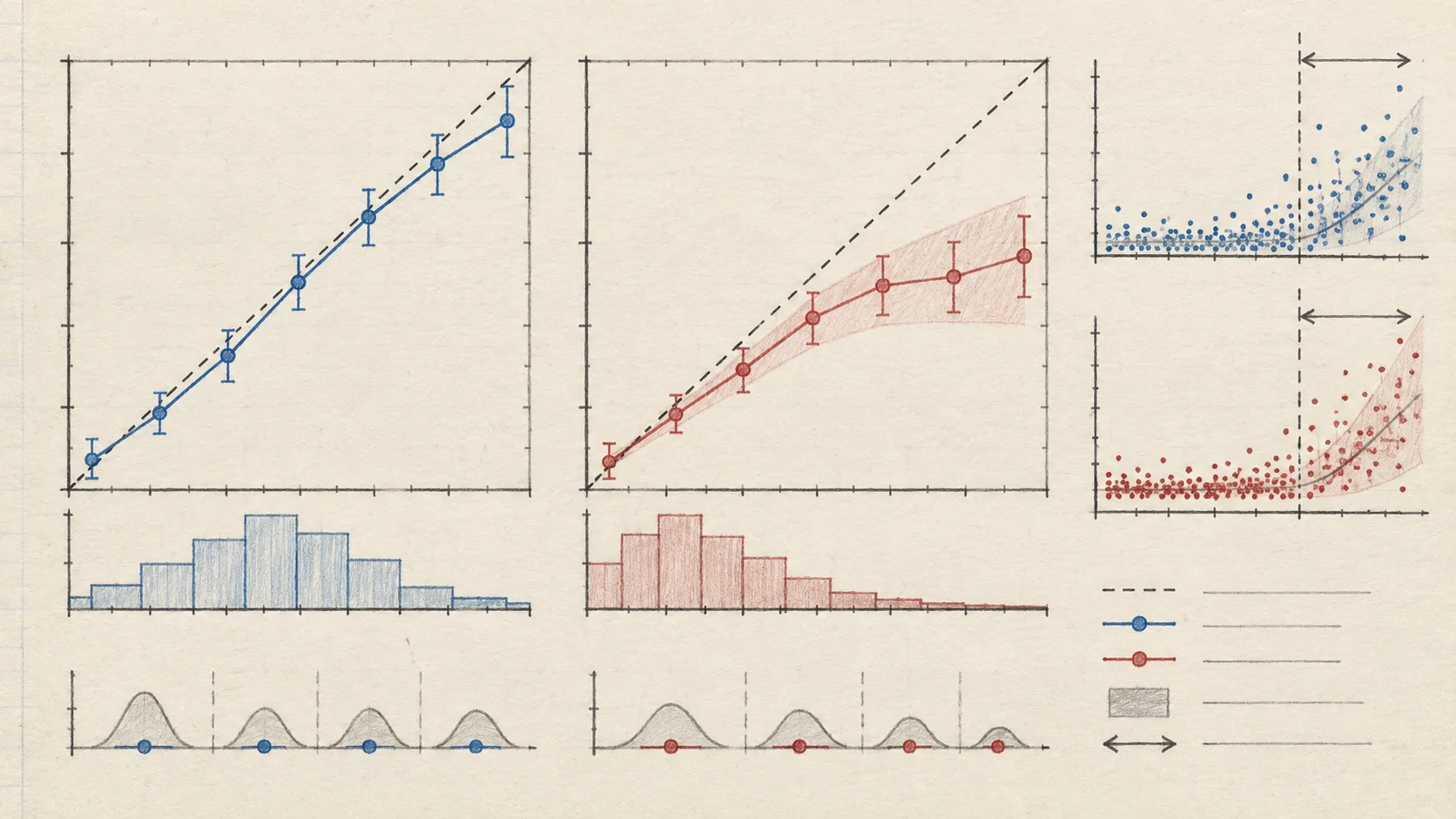
A composite score hides important differences. A system can be faster but less calibrated, cheaper but harder to operate, or more accurate on a judge tier but weaker on genuinely ambiguous cases. For an agent or workflow that uses probability thresholds, calibration can matter more than a small change in raw accuracy.
The five systems at a glance
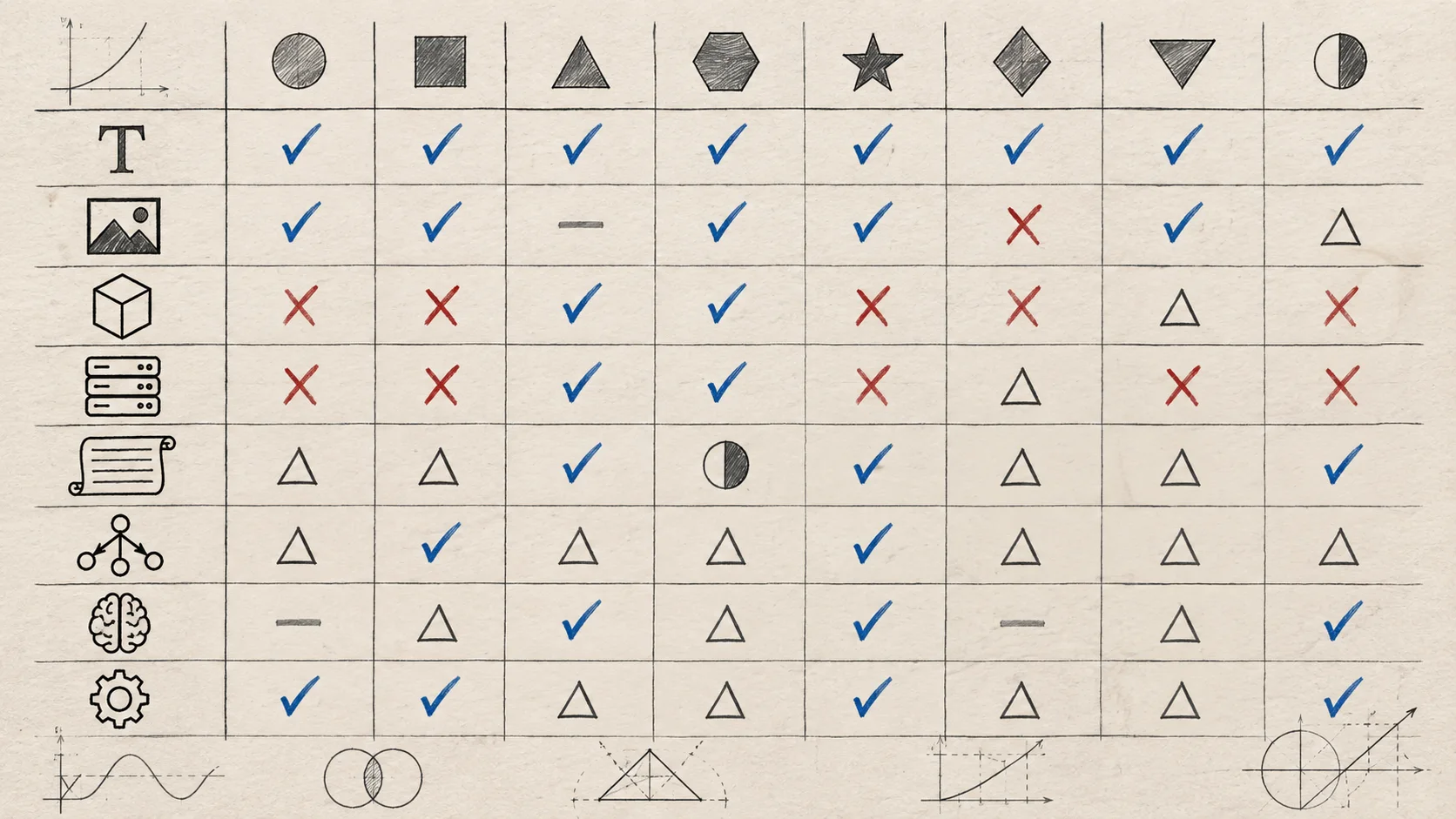
| System | Strength | Trade-off | Best fit |
|---|---|---|---|
| Jev | Hosted typed decisions and calibrated probabilities | Text-only input and usage-based API | Production routing, scoring, and guardrails |
| djev | Speed plus native images and camera frames | Probabilities are documented as experimental | Fast multimodal prototypes and visual decisions |
| Laya | Apache-2.0 weights, CPU/GPU self-hosting, fine-tuning | Needs task data and tuning for reliable production quality | Offline or multilingual systems with training capacity |
| OpenJev | Jev-compatible API, images, thinking mode | GPU or Apple Silicon operations and configuration | Self-hosted teams wanting a familiar request shape |
| SemIf | Open implementation, offline logits, strong aggregate score | Own GPU, serving, and per-workload calibration | Controlled networks and teams comfortable with model operations |
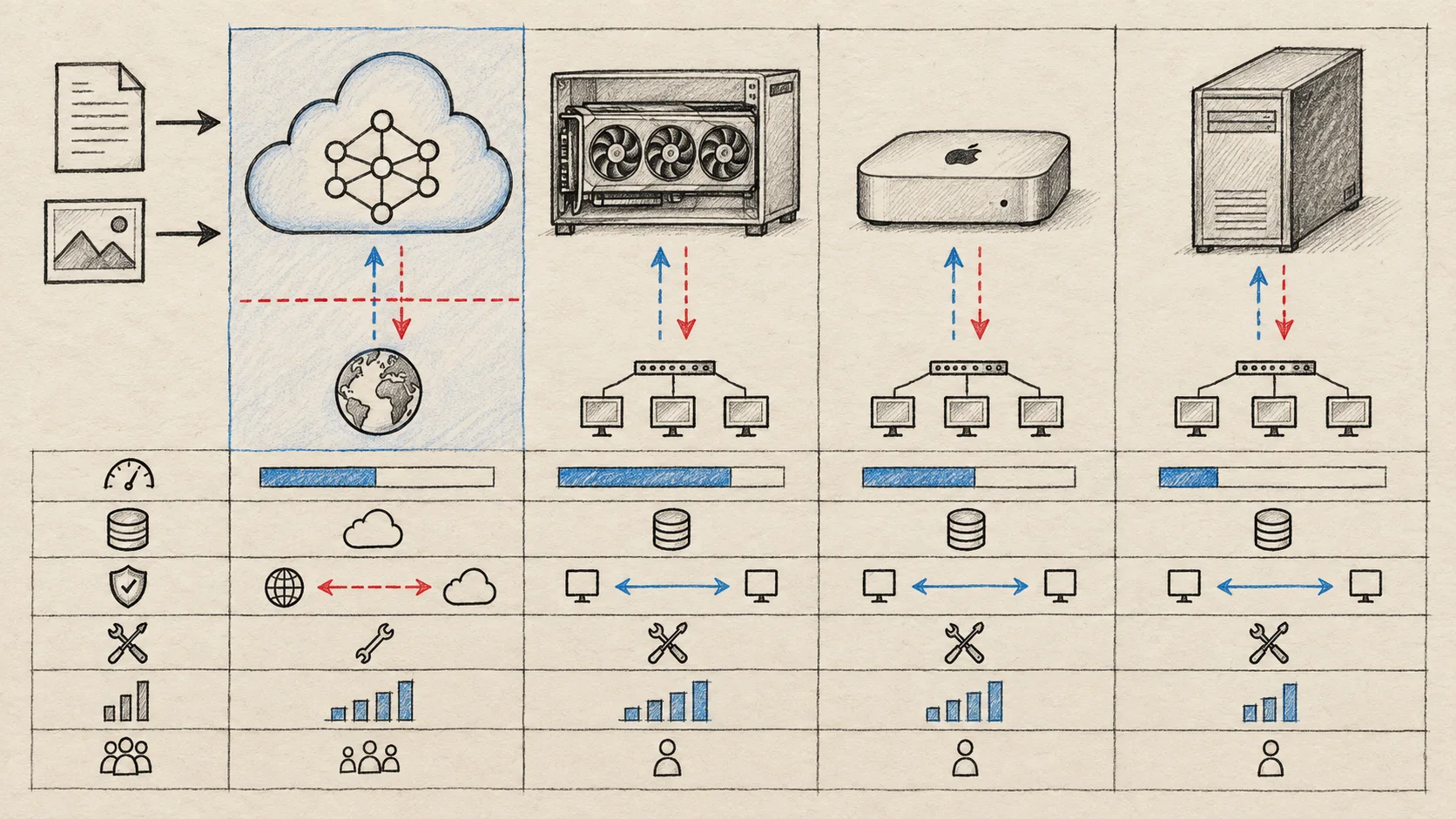
The deployment boundary is often more important than the leaderboard. A hosted API reduces infrastructure work but sends requests to a vendor. A self-hosted model keeps data closer to your system but makes capacity planning, monitoring, upgrades, and calibration your responsibility.
Jev vs djev
The Jev vs djev comparison describes a close contest with a clear difference in operating priorities.
Jev leads the published calibration score, 82.7 versus djev’s 65.4, and the hard-tier accuracy comparison is 74.1% versus 69.5%. djev leads the speed axis, 91.4 versus Jev’s 83.3. On easy and standard cases, the two systems are close enough that the deployment choice may matter more than raw accuracy.
The input boundary is decisive:
- Jev focuses on text, JSON objects, and arrays of text.
- djev accepts text, native image input, image options, and live camera frames.
- Both support typed decision shapes such as Noul, Choice, and Score.
Use Jev when the application uses probability for auto-approval, escalation, weighting, or routing and you want a production-oriented hosted path. Use djev when visual context or very low latency is the primary requirement and you can treat its probability output as experimental until your own evaluation proves otherwise.
The cost model is also different. The comparison page describes Jev as a hosted production API with a planned usage model, while djev is available as a free preview with announced pricing. Preview availability and pricing can change, so verify the current terms before committing an architecture.
Jev vs Laya
The Jev vs Laya comparison is mainly a comparison between a ready-to-use hosted model and an open-weights model that you can tune yourself.
The published hard-tier accuracy is 74.1% for Jev versus 34.1% for Laya in the compared configurations. Jev’s intelligence score is 85.7 versus Laya’s 45.8, while Laya is designed for much faster local inference on suitable hardware. Laya’s strongest case is not zero-shot quality; it is ownership, fine-tuning, offline operation, and low marginal cost when a busy GPU is already available.
Important differences include:
- Jev accepts up to 64k tokens per request in the comparison; Laya’s per-question context is 512 tokens.
- Laya offers Apache-2.0 weights and English or multilingual checkpoints.
- Laya needs labelled examples and fine-tuning for a stable production task.
- Jev works as delivered through a hosted API, without an idle GPU or training run to manage.
Laya can be the better choice when data cannot leave your network and you have a fixed taxonomy, labelled examples, and a team that can own model serving. Jev is the better first path when you want to validate a decision workflow without building that infrastructure.
Jev vs OpenJev
The Jev vs OpenJev comparison is less about the request shape and more about what happens after the request leaves your application.
OpenJev is designed as a compatible decision server. It can accept the same general /v1/systemone shape, run on a 24GB NVIDIA GPU or Apple Silicon, accept up to eight images per request, and offer a thinking mode with a quality and latency trade-off. Jev is a hosted production API focused on text decisions.
In the published default comparison, Jev scores 82.7 on calibration versus OpenJev’s 64.8, and 74.1% versus 65.5% on hard cases. Their speed scores are close, 83.3 versus 83.2. OpenJev’s thinking configuration is a separate operating point: its comparison page reports 88.0 intelligence and 78.2% on the hard tier, so it should not be mixed into a default-versus-default claim.
Choose OpenJev when you need image inputs, self-hosting, Apache-2.0 code and weights, or a compatible API that can run inside your network. Choose Jev when calibrated probability, managed operations, and a quick path to production matter more than owning the runtime.
Jev vs SemIf
The Jev vs SemIf comparison is the closest open alternative in the published composite ranking: SemIf scores 73.1 versus Jev’s 74.4 and ranks #2 versus #1.
The difference is concentrated rather than universal:
- SemIf leads the judge tier, 95.2% versus Jev’s 94.5%.
- Jev leads the hard tier, 74.1% versus SemIf’s 59.5%.
- Jev’s calibration score is 82.7 versus SemIf’s 72.6.
- Speed scores are nearly tied, 83.3 for Jev versus 83.7 for SemIf.
SemIf uses an open-model logit-reading approach, with Qwen3.5-4B as the primary benchmark configuration. Its code is MIT, but upstream model weights retain their own licences. It keeps inference in your environment, but you own the GPU, serving stack, capacity planning, and calibration for your workload.
Jev is a strong fit when the probability signal needs to work out of the box and traffic is bursty enough that idle GPU cost would be wasteful. SemIf is compelling when a busy GPU is already available, offline operation is required, and the team is prepared to fit and monitor thresholds.
Choose by constraint
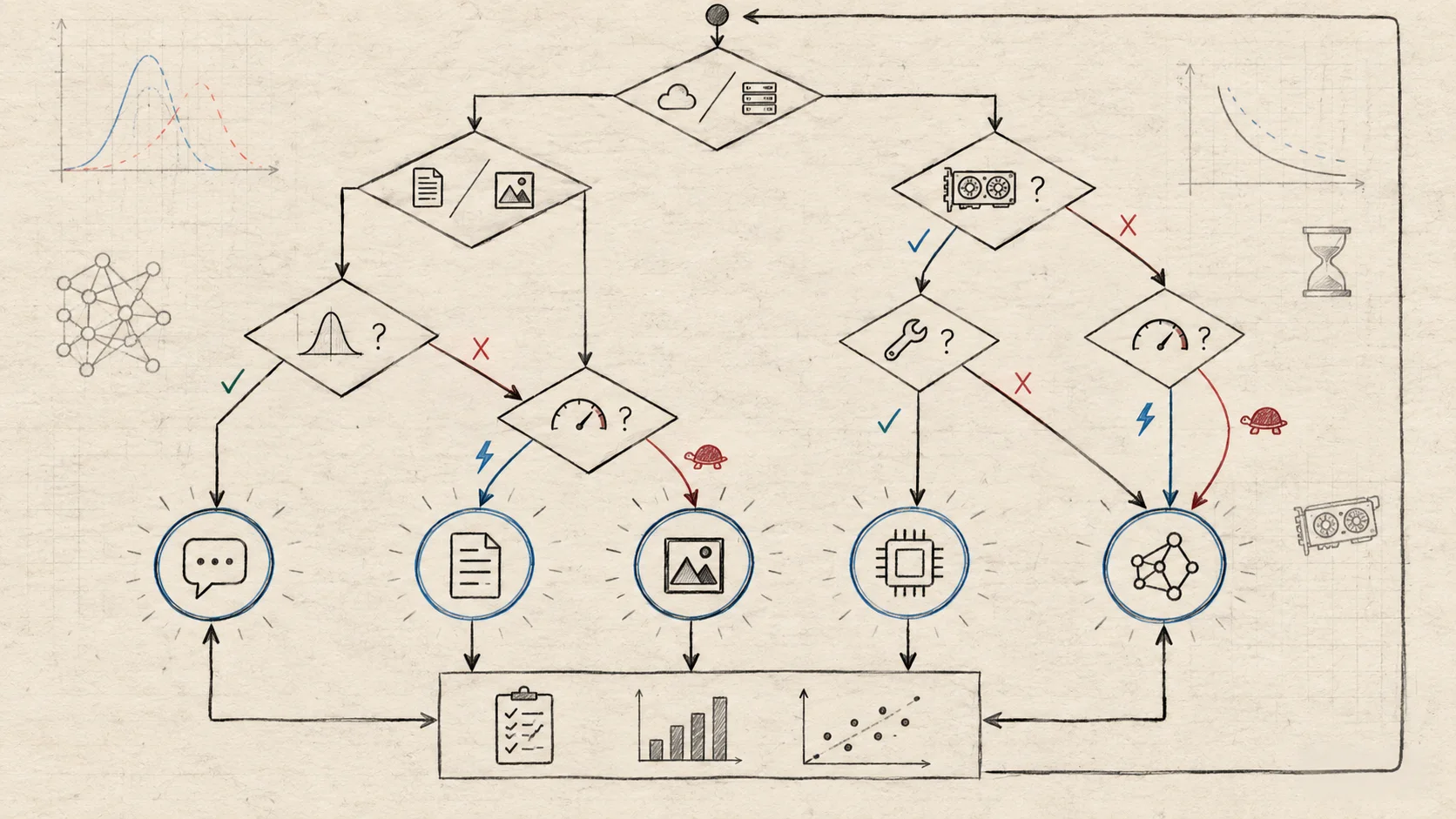
Start with the constraint that would be most expensive to change later:
| Your primary constraint | First systems to evaluate | Why |
|---|---|---|
| Managed production API | Jev, djev | No GPU serving stack; compare calibration and multimodal needs |
| Native image or camera input | djev, OpenJev | Both comparison pages highlight multimodal input |
| Data must stay inside your network | Laya, OpenJev, SemIf | Self-hosting keeps the serving boundary under your control |
| Calibrated probabilities for routing | Jev first, then SemIf | Compare thresholds on your own difficult cases |
| Fine-tuning and open weights | Laya, OpenJev, SemIf | You can inspect, modify, or operate the runtime |
| Compatible Jev request format | Jev, OpenJev | OpenJev is designed around a compatible API shape |
| Bursty traffic with no idle GPU | Jev | Hosted access avoids capacity planning for a local accelerator |
| Very low local latency | Laya, SemIf, OpenJev | Measure end-to-end latency, not only model inference time |
How to run your own evaluation
The most valuable result is not a universal winner. It is a model choice that survives your real examples.
1. Freeze the decision interface
Use the same State, question wording, answer options, and output policy for every system. If one system receives a richer prompt or a different taxonomy, the comparison is not fair.
2. Build a representative test set
Include normal cases, ambiguous cases, long contexts, adversarial inputs, and examples that should be escalated. Separate easy classification from decisions where probability will control a real action.
3. Measure more than accuracy
Track at least:
- exact decision accuracy by difficulty;
- calibration or expected calibration error;
- p50 and p95 end-to-end latency;
- cost at realistic traffic, including idle GPU time;
- multimodal quality when images are part of the task;
- operational effort for deployment, upgrades, and incidents;
- privacy, retention, and network-boundary requirements.
4. Test the threshold policy
If code will auto-approve, route, block, or escalate from a probability, evaluate the threshold itself. A model that wins on average can still be the wrong choice if its uncertainty signal is not stable where your application acts.
5. Re-test after changes
Open models, hosted previews, prices, runtimes, and calibration layers change. Record the model version, runtime configuration, date, and test set with every benchmark result.
Frequently asked questions
Is Jev always the highest-quality choice?
No. The referenced benchmark puts Jev first on the composite and hard-tier comparison, but SemIf leads the judge tier, djev leads the speed axis, Laya leads on open-weight ownership and local latency, and OpenJev offers a compatible self-hosted path with images and thinking mode.
Which system is best for a private deployment?
Evaluate Laya, OpenJev, and SemIf first because their comparison pages describe self-hosted paths. The right choice depends on your GPU, data policy, fine-tuning needs, and ability to calibrate probabilities.
Which model should an AI agent use for tool safety?
Start with the system whose probability signal and operating boundary you can validate. For high-impact tools, keep deterministic permissions and human approval in application code regardless of the model you choose.
Can benchmark scores be treated as current product guarantees?
No. The comparison is a dated snapshot measured on a defined decision set. Use it to decide what to test, then run the same workload and threshold policy on the versions and deployment modes you plan to ship.
Final takeaway
The choice between Jev, djev, Laya, OpenJev, and SemIf is a systems decision, not just a model-quality contest. Jev prioritizes managed access and calibrated decisions. djev prioritizes speed and native visual input. Laya prioritizes open weights, self-hosting, and fine-tuning. OpenJev prioritizes compatible deployment with multimodal and thinking options. SemIf prioritizes open logits and control over the runtime.
Pick the constraint that matters most, test the hard cases where systems separate, and measure the probability policy that your code will actually use. That is how a comparison becomes a reliable production decision.